

Design for the Tradition of Objects Found
November 24, 2025 / Helen Kachur
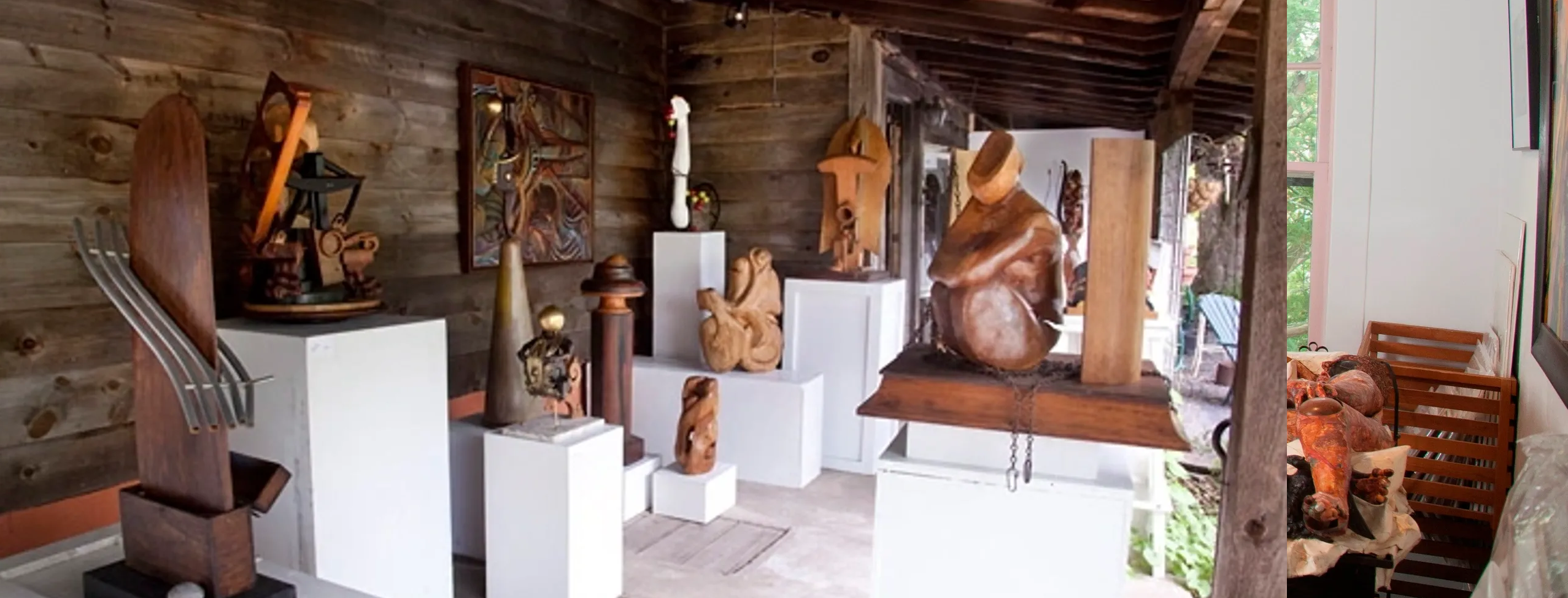
TheArtGuide.com presents the work and words of one of our top Feature Artists, Fay Wood. Fay has studied and taught art through sculpture for over sixty years, showing her designs across the United States as well as Italy, Germany and England. This year Fay’s art was exhibited at large corporate libraries and her paintings selected for print by a Canadian manufacturer clothing line as well as earlier features in the film “Audrey.” We feel that it’s a great privilege to represent Fay at The Art Guide and look forward to sharing her insights and journey with our viewers.
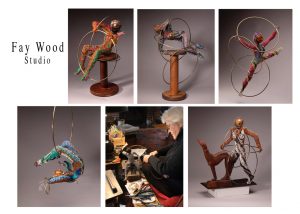
The Use of Found Objects by Artist Fay Wood
By the late 19th century, Found Objects was a technical art term that encompassed the broad use of mixed-media genre. The advent and bold use of new high-tech materials in juxtaposition to typical household items, were often chosen more for their aesthetic and textural value than light or color qualities. Unique fabrics and recognized mass-produced items were often used to invoke social and personal messages. Found Objects, as the implement of existing items into art, became a term intended to exceed standard art materials and bring about change, including the very way a project was designed for viewing. Today, sculptors like Fay Wood often choose to incorporate into their art a variety of plastics, metals, synthetic molded resins, wire or natural materials. Their works are of a new art concept that for years has forces the unanimous public reaction, “… what defines art.”
In her work, Fay Wood often interwinds design materials in unexpected compositions, without limit to their inherent use. She carefully sketches and anticipates a sculpted work’s movement, composition and balance. Her intention is to challenge the viewer’s perception through awareness of a material’s physical makeup and potential for unexpected beauty. For example, the sculptor Henry Moore collected bones and flints which he treated as natural sculptures in of themselves, as well a source for his own design work. Found objects can also be modified by an artist and presented as a final piece, either more or less intact as with the Dada and Surrealist artist, Marcel Duchamp’s ready-mades, or as part of an assemblage. Fay often relies on and references the early practices of artists such as Duchamp, the Dadas, Picasso, Jasper Johns, the Arte Povera movement.
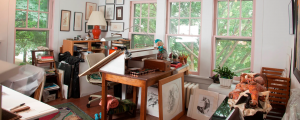
In teaching, Fay Wood will remind her students that the use of Found Objects is not a new idea. There’s evidence throughout history that people were attracted to natural objects such as gems, feathers, stones or seashells that were incorporated into decorative art designs. It was the French in the early 20th century that unified the art under the name, “Objet Trouve,” at the time a technique that was considered subversive, ultra-modern, and in direct opposite of past “academic” practices. In that same rebellious tradition, Fay continues to search out unique objects that both challenge and engage viewer interaction.
Fay commented that, “My own first meeting with Found Object sculpture was seeing a cutting-edge exhibition at the Museum of Fine Arts in Boston. I was in my first year at the Massachusetts College of Art, a budding young artist steeped in art tradition, who was not impressed with the makings of academic studies. Several years later, while driving along the San Francisco bay, I saw an amazing sight. Along the shore were a collection of large, absolutely spectacular sculptures made by a group who scavenged the beach for materials. Driftwood and beach found items were transformed into life-size, dynamic works. I have never forgotten them. From that time to today, I have been experimenting with a variety of materials at hand to design carved works, create sculpture, collage and tapestry.”
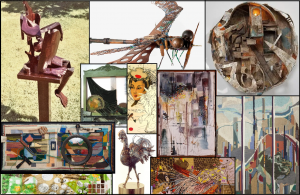
“Woman on a Pedestal” Found Wood (top left)
Fay Wood shares that, “’Woman on a Pedestal,’ made of cherry wood was one of my first attempts in using the Found Object technique and I continue to do variations of that theme for years. I first began carving Cherry wood through the encouragement of sculptor Jasmine Saunders, from Sheffield, Massachusetts. In her studio I attended a life drawing group and began to add objects to my works for texture, height and enhanced narrative.”
See Fay Wood’s many works at www.faywoodstudio, Art Guide Feature Listing or contact her at, info@faywoodstudio.com.
Featured above, “Chanticleer,” winner of the Proskauer Prize for non-traditional sculpture – National Sculpture Society Annual award exhibition
Comments
Western Art Galleries
A new take on design that is often forgotten, but so effective in changing the way we work and view art today. As always, many thanks to Art Guide for the reminder!
Nov 26, 2025
GRCUFire44
It takes an unspoken courage from within the soul to even think of creating the volume of works and variety of this level, and then act on that inspiration. I’m very impressed with Fay. Would like to see more of her works in the time to come.
Nov 25, 2025
Spark4Arts
MY ART WORK IS NOW GOING TO TAKE A NEW DIRECTION! I'VE BEEN THINKING ABOUT USING SMALL OBJECTS IN MY PAINTINGS, BUT THANKS TO FAY...PLAN ON GOING BOLD. THANK YOU ART GUIDE OF THE CONSTANT STREAM OF VALUABLE ART INFO!
Nov 24, 2025